Beliefs
People trusted different things in different ages. Some ideas we can still see. Some are stories.
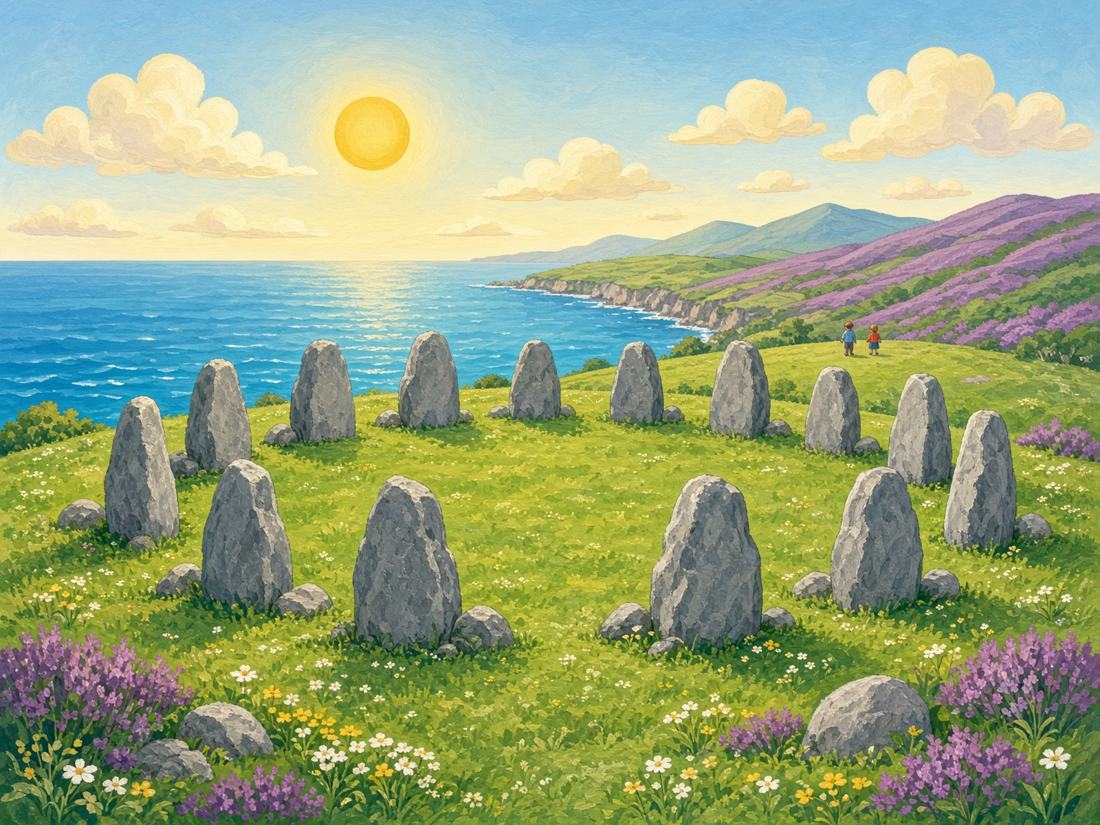
Stones and seasons
The first farmers watched the sun and the seasons. They built stone houses and stone rings.
We are not sure what the stones at Callanish meant to them.
We are not sure what the people at Skara Brae believed.
Pictish marks
Pictish artists carved animals, combs, and mirrors on big stones.
We are not sure what the symbols mean.
We are not sure how the Pictish language sounded.
Saints and churches
Ninian is linked to Whithorn. Columba brought a monastery to Iona.
Queen Margaret prayed and fed people who were poor.
In 1560 many people wanted prayers in the language they spoke. John Knox was one strong voice. The church changed.
In 1637 a new prayer book made people angry in Edinburgh. Stories say Jenny Geddes threw a stool. We are not sure about every part of the stool story.
Stories, marked as stories
A kelpie is a water horse in a story. It is not a proven animal.
A selkie is a seal person in a story. It is not a proven animal.
A brownie is a helpful house spirit in a story.
The Loch Ness monster is a modern story people tell. It is not a proven animal.
Stories say a king saw a white cross in the sky. That tale is a story. The saltire flag is real.
Parties and cloth
Hogmanay is New Year. People visit, sing, and stay up late.
Burns Night is near 25 January. People read his poems and eat a special supper.
A ceilidh is a party with music and dancing.
Many clans have a tartan now. Long ago, cloth patterns were not a strict uniform for each clan. The tight clan-tartan rules are mostly a later fashion. The Victorian years made them very popular.